

Rated 4.7 out of 5 stars
4.7 / 5


726,000+ customers
Free 60-Day Returns
1-Year Warranty
726,000+ customers
Free 60-Day Returns
1-Year Warranty
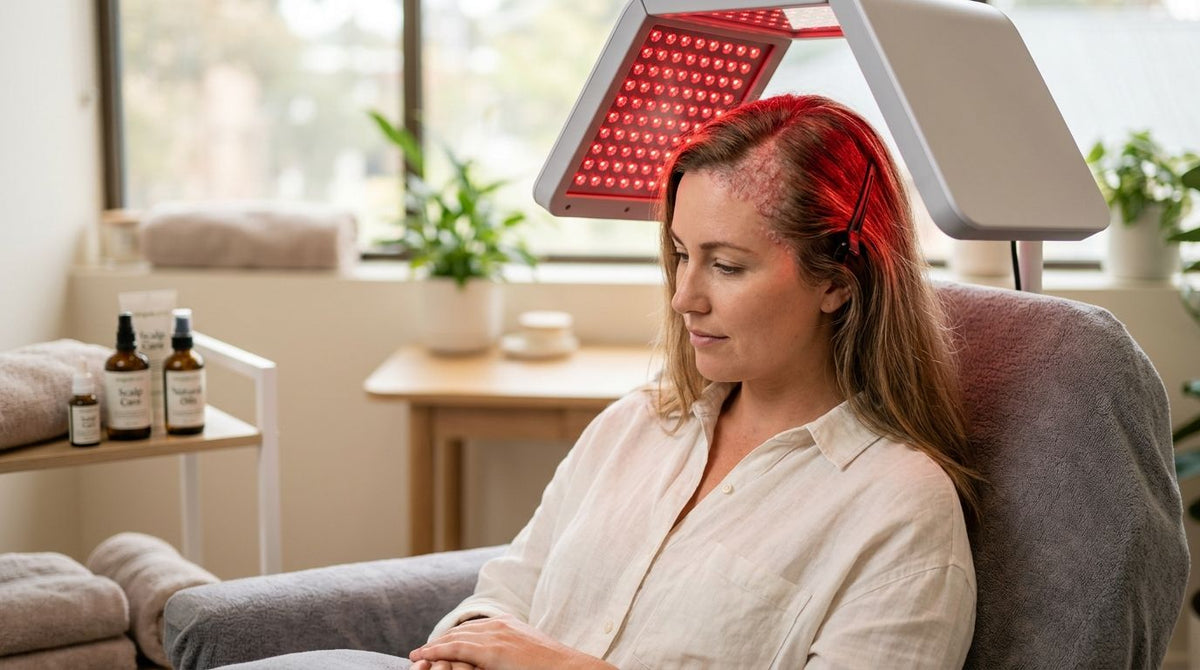
Red light therapy for scalp psoriasis targets the redness, thick scale, and itch of psoriasis plaques where hair meets skin, aiming to calm flare-ups between dermatologist visits rather than replace prescription treatment. Scalp psoriasis behaves differently from psoriasis on the face or body: hair blocks light penetration, plaques sit thicker and more adherent, and scratching a scalp itch triggers new lesions through the Koebner phenomenon far more easily than scratching an arm.
Scalp psoriasis is one of the hardest sites to treat topically because hair traps ointments, tars, and steroid foams against the scalp longer than intended, which irritates already-inflamed skin. Low-level red and near-infrared light is a non-chemical option that doesn't require rinsing, doesn't stain pillowcases, and doesn't carry the skin-thinning risk that comes with long-term topical steroid use.
The catch is physical, not clinical: hair absorbs and scatters light before it reaches the scalp. That's why this segment needs a different plan than someone using red light therapy for scalp psoriasis on hairline plaques with the Radiant Renewal wand versus someone treating flares under a full head of hair. Anyone managing an active flare should also read up on red light therapy for psoriasis flare-ups before starting a routine, since flare-stage skin needs gentler handling than maintenance-stage skin.
Scalp psoriasis is frequently mistaken for seborrheic dermatitis or severe dandruff, and the treatment approach differs for each.
Light can't treat what it can't reach. Scale buildup sits on top of plaques and blocks direct contact.
Most scalp psoriasis extends past the hairline onto the forehead, temples, and behind the ears - areas a handheld wand can actually reach.
This is where a handheld device like the Radiant Renewal wand earns its place in the routine - it's built and FDA-cleared for facial and neck skincare use, and its practical reach for psoriasis is the hairline and exposed plaque edges, not scalp fully covered by hair.
One long session doesn't out-perform several short ones for inflammatory skin conditions.
What touches psoriasis-prone skin around treatment sessions matters as much as the light itself.
Scalp psoriasis flares in response to stress, cold weather, and hair product buildup more visibly than psoriasis elsewhere.
Red light therapy is a supportive tool, not a substitute for prescription-strength intervention when plaques are thick, widespread, or cracking.
| Option | Best for | Key limitation |
|---|---|---|
| Handheld red light wand (hairline/edges) | Visible plaques at the hairline, temples, behind ears | Can't reach skin under dense hair |
| Dedicated full-scalp LED comb or cap | Plaques spread across hair-covered scalp | Needs hair parted in sections; longer sessions |
| Prescription topical (steroid, vitamin D analog) | Active, inflamed flares needing fast control | Rebound flares possible with long-term steroid use |
| Combined light therapy + dermatologist plan | Moderate-to-severe or persistent psoriasis | Requires coordination and follow-up visits |
The straightforward read: a handheld wand handles the hairline, a dermatologist handles what's under the hair. Treat those as complementary, not competing, tools.


What's the best red light therapy device for scalp psoriasis?
A handheld red light therapy wand works best for hairline and edge plaques, while dedicated full-scalp combs or caps reach plaques under dense hair. No single device covers both zones equally well, so match the device to where your plaques actually sit.
Does red light therapy help psoriasis or make it worse?
Low-level red light therapy generally supports flare management by calming inflammation without the skin-thinning risk of long-term topical steroids. It won't worsen psoriasis when used on intact skin, but it should be paused on cracked or bleeding plaques until they heal.
How long before red light therapy improves scalp psoriasis?
Give any light therapy routine 4 to 8 weeks of consistent use before judging results. Short daily sessions tracked against a weekly severity log show patterns faster than sporadic, longer sessions.
Can I use a face red light therapy wand on my scalp?
Yes, at the hairline, temples, and any exposed skin around plaques, since these devices are built and FDA-cleared for facial and neck skincare use. They aren't designed to part thick hair, so their practical reach on the scalp is limited to visible edges.
Is red light therapy safe with psoriasis prescription treatments?
Red light therapy is generally used alongside prescribed topical steroids or vitamin D analogs rather than in place of them. Confirm timing with your dermatologist, since applying light and medicated topicals in the same session can reduce absorption of either.
How often should I use red light therapy for scalp psoriasis?
Most routines run several short sessions per week rather than one long session. Reduce frequency, not treatment length, if skin feels more irritated afterward.
Does hair block red light therapy from reaching the scalp?
Yes, hair absorbs and scatters light before it reaches the skin underneath. That's why hairline and part-line treatment works more reliably than passing a device over covered hair.
Is red light therapy FDA-cleared for psoriasis?
Solawave's devices carry FDA clearance for general skincare use on the face, neck, and jawline, not a psoriasis-specific indication. Use them for hairline and exposed-plaque support alongside, not instead of, a dermatologist's psoriasis treatment plan.
Part your hair the way a colorist sections hair for foils - in rows, clipped out of the way - before every scalp-adjacent light session. It sounds fussy in 2026's rush-through-your-routine world, but it's the single change that turns a wasted pass over hair into direct skin contact, and it takes under a minute once you've done it twice.
 Acne
Acne

