

Rated 4.7 out of 5 stars
4.7 / 5


726,000+ customers
Free 60-Day Returns
1-Year Warranty
726,000+ customers
Free 60-Day Returns
1-Year Warranty
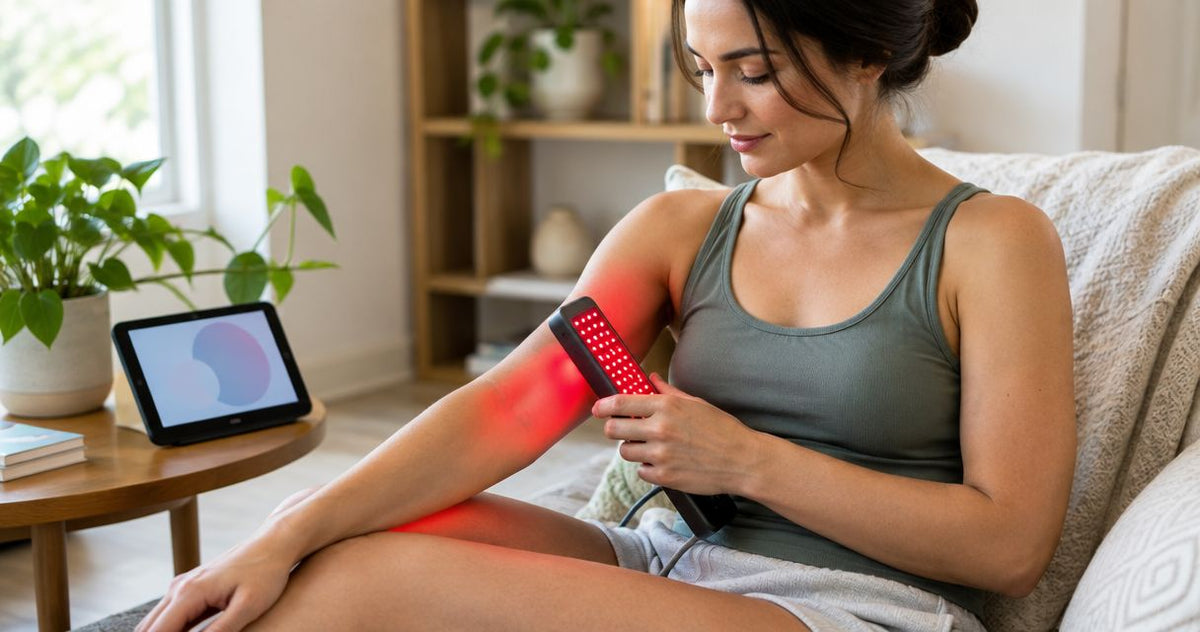
Red light therapy for keratosis pilaris on arms and legs targets the redness and inflammation around clogged hair follicles — it doesn't dissolve the keratin plug causing the bump itself. Pair it with exfoliation and the right moisturizer and most people notice smoother-looking skin within 8 to 12 weeks, not overnight.
Keratosis pilaris is common, not rare — the American Academy of Dermatology estimates it affects roughly 40% of adults, usually on the upper arms and outer thighs. It isn't dangerous and it isn't infectious. It's keratin building up around hair follicles, and for most people it never fully disappears; it just gets managed down to nearly invisible.
That's the gap a lot of people searching red light therapy for keratosis pilaris miss going into 2026: red light is anti-inflammatory, not exfoliating. It calms the redness ringing each bump and can support collagen in the surrounding skin, but it doesn't scrub out the plug. Solawave makes handheld red light devices built for the face and neck that also work as a spot tool on arms and legs — useful for the redness half of the KP equation, not the texture half on its own.
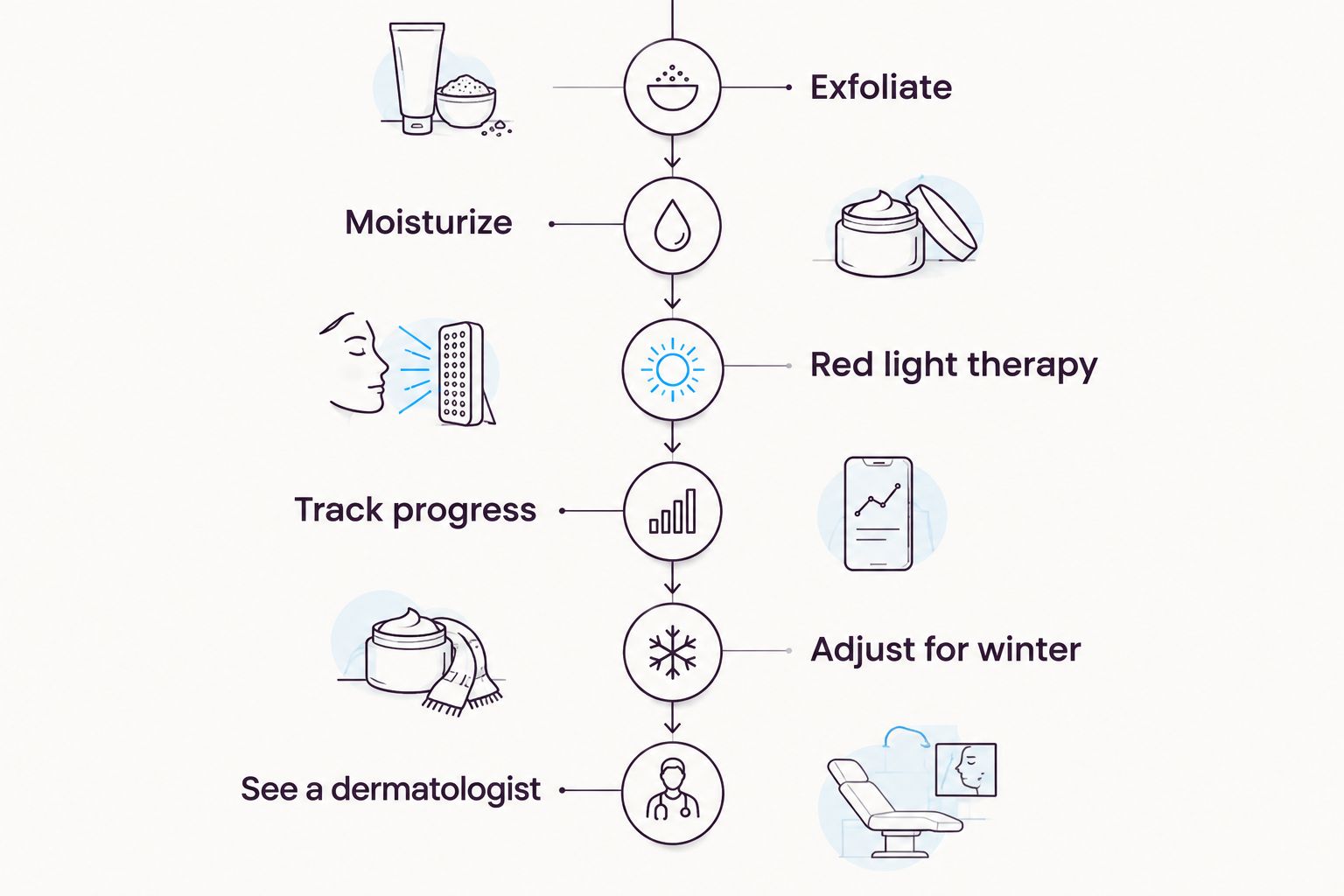
The order matters here more than any single product. Exfoliate first, moisturize immediately after, then use light therapy to calm what's left inflamed.
This step is free or close to it, and it does more for KP texture than anything else on this list.
Skipping this step undoes most of what exfoliation just did.
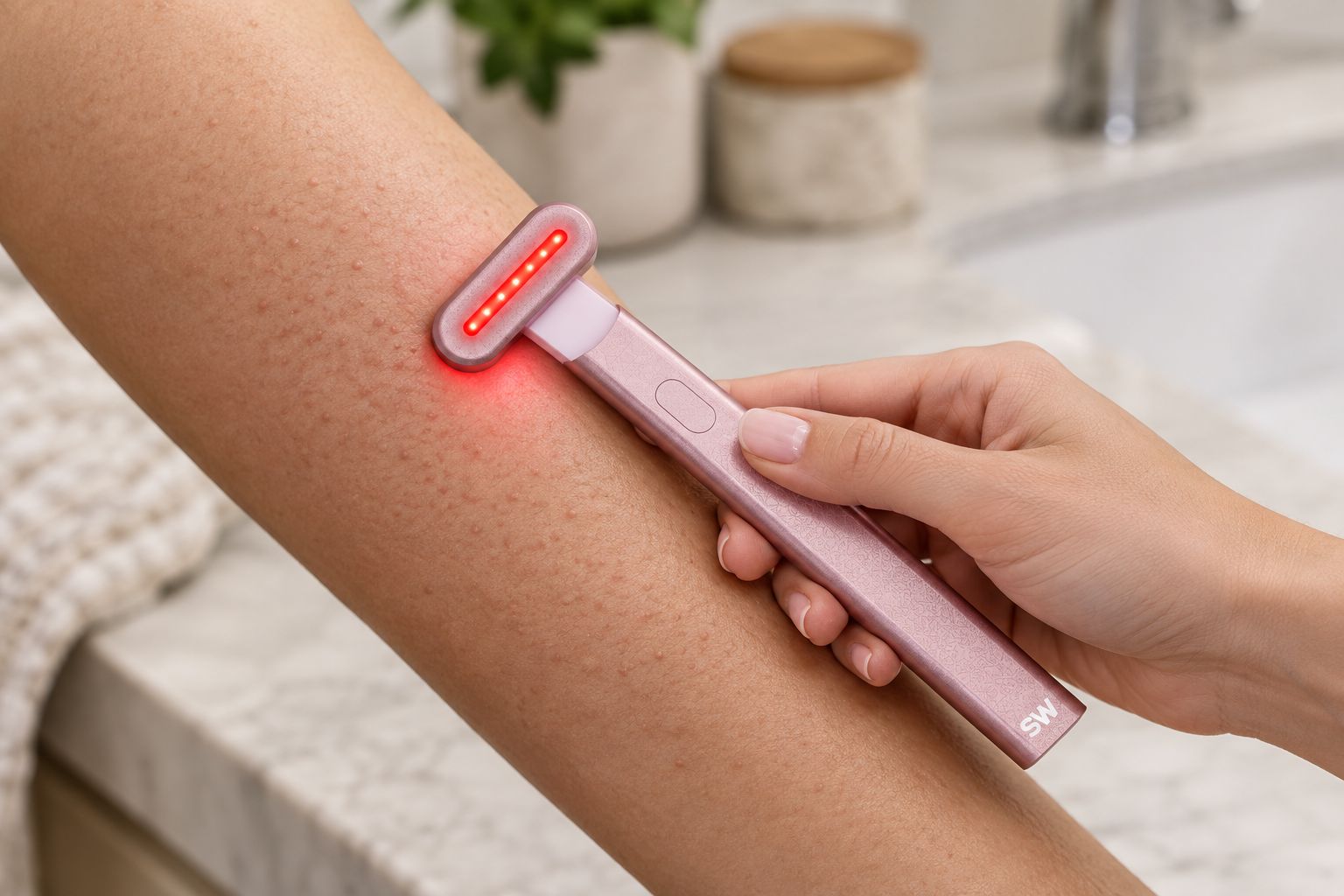
This is where the faster path comes in, once the manual basics are already running. Handheld red light devices weren't designed exclusively for the face — a device like the 4-in-1 Radiant Renewal Skincare Wand is small enough to glide over a forearm or thigh the same way it works a jawline.
KP bumps feel roughly the same to the touch for weeks before they visibly shrink, which is why so many people quit early.
KP flares predictably with dry, cold air, so the routine needs a seasonal version.
Home care has a ceiling, and it's worth recognizing before months get spent past it.
| Option | Best for | Key limitation | Verdict |
|---|---|---|---|
| Manual exfoliation + moisturizer alone | Mild, early-stage KP with little redness | Doesn't address inflammation once bumps flare red | Hold — start here, add light therapy if redness lingers |
| OTC AHA or urea creams | Flaky, thick keratin buildup | Can sting broken or sensitive skin | Buy — pair with a moisturizer, not alone |
| At-home red light therapy (handheld wand) | Calming redness and irritation between exfoliation sessions | Doesn't remove the keratin plug on its own | Buy — as an add-on, not a stand-alone fix |
| Dermatologist treatment (prescription retinoids, laser) | Moderate to severe or long-standing KP that hasn't responded at home | Requires appointments and ongoing visits | Consider — once a home routine plateaus after 12 weeks |
Red light therapy calms the redness around keratosis pilaris bumps; it doesn't dissolve the keratin plug causing them. That single distinction decides whether a routine actually works in 2026 or just adds another product to the shelf.
Once the exfoliation and moisturizing habits are running, a handheld device earns its place as the redness-control layer rather than the whole plan.


What is the best treatment for keratosis pilaris on arms and legs?
A combination of chemical exfoliation (lactic or glycolic acid), a ceramide moisturizer, and red light therapy for the redness works better than any single step alone. Keratosis pilaris responds to routines run consistently for 8 to 12 weeks, not single treatments.
Does red light therapy get rid of keratosis pilaris bumps?
Red light therapy reduces the redness and inflammation around KP bumps but doesn't dissolve the keratin plug causing the texture. It works best paired with an exfoliant that addresses the plug directly.
How often should I use red light therapy for keratosis pilaris?
3 to 4 sessions a week of 3 to 5 minutes per patch is a reasonable starting cadence. Daily use doesn't speed up results and can skip the recovery time skin needs between sessions.
Can I use a face red light therapy wand on my arms and legs?
Yes — a handheld wand built for the face works the same way on a body patch since the light output doesn't change by location. Larger areas just take longer to cover than a single spot on the face.
Is keratosis pilaris permanent?
For most people it's a long-term condition managed rather than cured, though it commonly improves with age and can fade after the teenage years or during adulthood. Consistent exfoliation and moisturizing keep it visually minimal even when it doesn't fully disappear.
How long does it take to see results from red light therapy on KP?
Redness typically responds before texture does, often within a few weeks of consistent sessions. Full texture change alongside exfoliation usually takes the full 8 to 12 week window.
Does exfoliation make keratosis pilaris worse before it gets better?
Over-exfoliating with gritty scrubs can inflame follicles and worsen redness, but a measured chemical exfoliant routine shouldn't cause a flare. If redness spikes after starting, cut back frequency rather than stopping entirely.
Should I see a dermatologist for keratosis pilaris?
See one if bumps stay inflamed, spread, or don't respond after 12 weeks of consistent home care. A dermatologist can prescribe stronger retinoids or discuss laser options that go beyond what home routines reach.
Keratosis pilaris tends to ease up with age for a lot of people, and pregnancy or hormonal shifts can change how visible it is in either direction — which is exactly why a photo log matters more than memory when judging whether a 2026 routine is actually working or the skin was just going to shift on its own.
 Acne
Acne

