

Rated 4.7 out of 5 stars
4.7 / 5


726,000+ customers
Free 60-Day Returns
1-Year Warranty
726,000+ customers
Free 60-Day Returns
1-Year Warranty
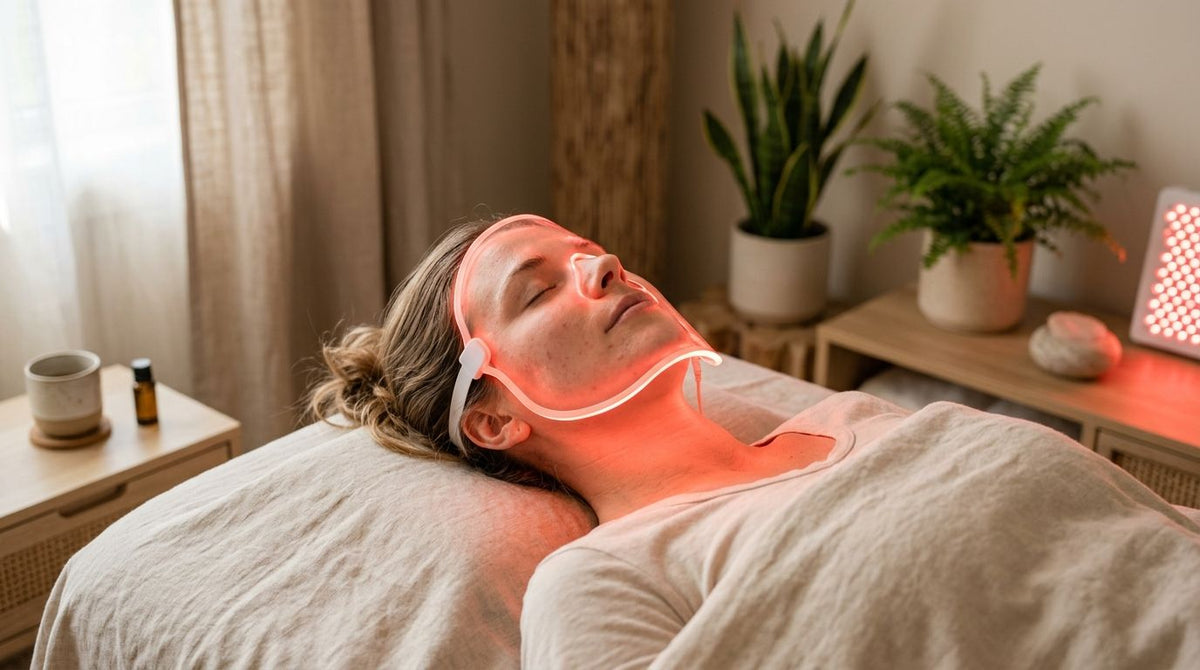
Red light therapy for skin barrier repair is a low-heat, at-home light treatment aimed at calming inflammation, reducing redness, and rebuilding the skin's protective layer without adding new irritation. This segment isn't chasing wrinkles or dark spots first — the goal is getting skin to stop stinging, flaking, and reacting to everything before anything else gets layered on top.
A compromised barrier reacts to everything — sunscreen stings, moisturizer pills, and skin that used to tolerate retinol now flares within hours. Most fixes marketed for this problem either do too little (a basic moisturizer) or too much (a fresh round of actives that make things worse). Red light therapy sits in between: it doesn't exfoliate, doesn't require friction, and works below body temperature, which matters when skin is already inflamed. Solawave built its device line specifically for at-home use without the heat output of clinical lasers or IPL, which is why it shows up in barrier-repair routines instead of being reserved for anti-aging alone.
The wavelength ranges typically used in red light devices — roughly 630-660nm for red light and 800-880nm for near-infrared — penetrate the skin without the thermal damage that comes from ablative treatments. That's the mechanical reason this category gets recommended for reactive, flaking, or stinging skin instead of just fine lines. Damaged-barrier skin also can't tolerate a six-step routine, so the steps below assume a stripped-down approach first.
Before adding red light therapy or anything else, confirm what you're dealing with. Barrier damage looks different from a breakout or a bad reaction to one product — it's systemic, not localized.
Skin can't heal while it's still being challenged. This step comes before red light therapy, not after.
This is where a device earns its place in the routine — after the basics are handled, not before. A handheld option like the Radiant Renewal Skincare Wand works on bare, clean skin without requiring active serums underneath, which matters when skin can't tolerate much else yet.
A damaged barrier usually comes with a disrupted microbiome, and treating one without the other slows healing. Pre- and probiotic formulas support the bacteria that keep skin resilient in the first place.
Order matters more than product count when skin is compromised. Humectants pull water in; lipids seal it there — reversing the order wastes both.
Mild barrier damage typically calms within 2-4 weeks of consistent, gentle care. Damage from over-exfoliation or reaction to a specific product often resolves faster than damage tied to eczema or a diagnosed skin condition.
Once skin tolerates a full routine without stinging or flaking, actives can come back — one at a time.


| Option | Best for | Key limitation |
|---|---|---|
| Moisturizer alone, no other change | Very mild, short-term dryness | Doesn't address the inflammation driving the damage |
| Barrier-repair cream only | Post-retinoid or post-sunburn flaking | Slow on its own, no circulation or collagen support |
| At-home red light therapy wand | Targeted daily treatment on cheeks, jawline, under eyes | Smaller treatment area, needs daily consistency |
| Full-face LED light therapy mask | Whole-face barrier support in one session | Higher upfront investment than a handheld wand |
| In-office LED or dermatologist visit | Severe or medically diagnosed barrier conditions | Recurring appointments, travel time, higher ongoing cost |
A handheld red light therapy wand is the right starting point for most damaged-barrier cases in 2026 — it treats a broader area than spot treatment but doesn't demand the commitment or cost of a full clinical protocol.
Is red light therapy safe for a damaged skin barrier?
Yes, red light therapy is generally safe for a damaged skin barrier because it works without heat or exfoliation. Keep sessions short (3-5 minutes) and skip layering active serums underneath until redness calms.
How long does it take to repair a skin barrier with red light therapy?
Mild barrier damage typically improves within 2-4 weeks of consistent daily sessions paired with a stripped-down routine. Deeper damage from over-exfoliation or a diagnosed condition can take longer and may need a dermatologist.
Can I use red light therapy and retinol together during barrier repair?
Not at the same time during an active flare — pause retinol for 1-2 weeks first. Once skin tolerates a full routine again, reintroduce retinol slowly while continuing red light therapy sessions.
What wavelength of red light therapy helps skin barrier repair?
Red light in the 630-660nm range and near-infrared around 800-880nm are the wavelengths typically used in at-home devices for this purpose. These ranges penetrate skin without the thermal damage associated with lasers or IPL.
Is red light therapy better than just moisturizer for barrier damage?
Moisturizer alone treats dryness but not the underlying inflammation. Red light therapy addresses the inflammatory response directly, which is why it's paired with, not swapped for, a good moisturizer.
Can red light therapy make a damaged barrier worse?
It's uncommon, but overuse or running sessions on broken or actively bleeding skin can aggravate irritation. Stop immediately if redness increases within 24 hours of a session.
How often should I use red light therapy for barrier repair?
Daily short sessions of 3-5 minutes are the standard starting point. Consistency over weeks matters more than session length.
Does red light therapy help with the skin microbiome, not just the barrier?
Red light therapy itself targets inflammation and circulation rather than bacterial balance directly. Pairing it with pre/probiotic products, like a Solabiome routine, addresses the microbiome side of barrier repair alongside it.
Red light in the 630-660nm range doesn't generate the heat that lasers or IPL do, which is exactly why it's one of the few active treatments considered appropriate during an actual barrier flare-up instead of only after skin has fully recovered. Most people wait until skin looks fine again before touching a device — the better move in 2026 is starting light therapy while skin is still calming down, as long as it's not broken or bleeding.
 Acne
Acne

