

Rated 4.7 out of 5 stars
4.7 / 5


726,000+ customers
Free 60-Day Returns
1-Year Warranty
726,000+ customers
Free 60-Day Returns
1-Year Warranty
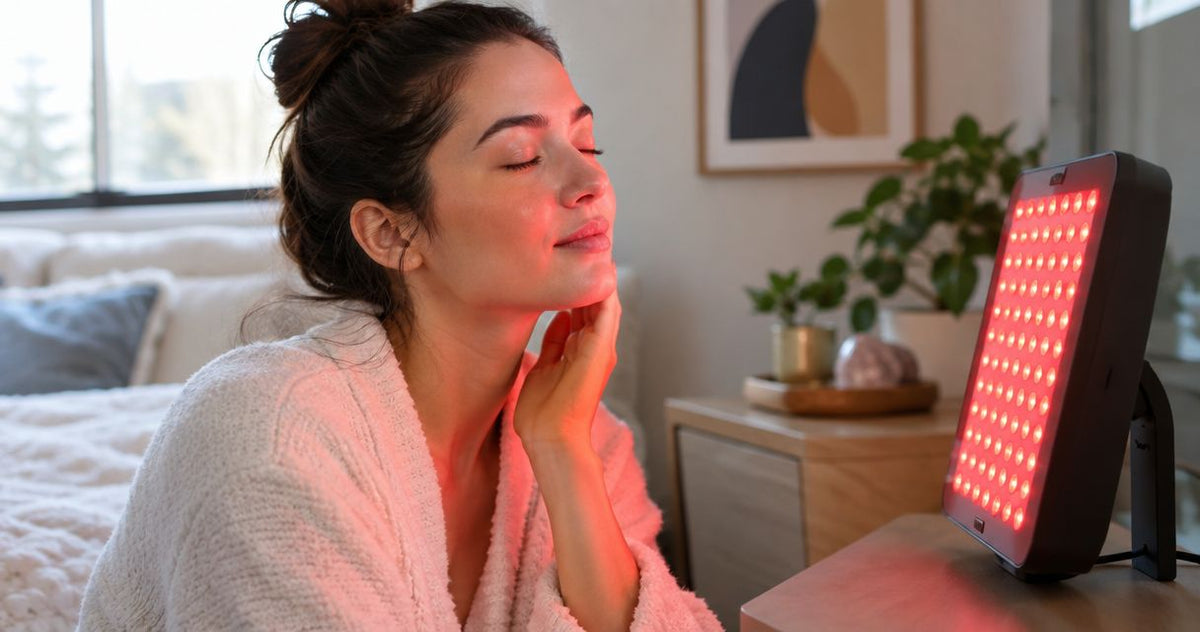
Red light therapy does not cause purging the way a new retinoid or exfoliating acid does — it doesn't speed up cell turnover or force congestion to the surface, which is the actual mechanism behind true purging. What people mistake for purging after starting a device is usually temporary redness, warmth, or a stray breakout tied to something else changed in the routine at the same time. In 2026, that distinction matters more than ever because so many people start a red light mask and a new serum in the same week.
Dermatologists generally describe true purging as tied to one full skin cycle, roughly four to six weeks, because that's how long it takes accelerated turnover to clear congestion that was already sitting under the surface. Red light therapy doesn't touch that turnover mechanism — it works through photobiomodulation, using red wavelengths around 630-660nm and near-infrared around 800-850nm to stimulate mitochondrial activity in skin cells. That's a fundamentally different process from what a retinoid does.
The confusion happens because people rarely start red light therapy in isolation. A new LED face mask often arrives the same week as a new cleanser, a new serum, or a ramped-up acid routine, and whatever breaks out gets blamed on the light. Reading about introducing red light therapy into a sensitive skin routine before you start helps separate what the device is actually doing from what everything else in the routine is doing.
The table below shows why red light therapy and true purging get confused, even though they're not the same event.
| True purging (retinoids/acids) | Red light therapy reaction | |
|---|---|---|
| Trigger | Faster cell turnover | New routine, heat, or paired actives |
| Onset | 1-2 weeks after starting | Same day or within 24 hours |
| Duration | 4-6 weeks (one turnover cycle) | 24-48 hours |
| What it looks like | Small whiteheads/blackheads in areas that already had congestion | Redness, warmth, occasional isolated pimple |
If you're starting with a device like the 4-in-1 Radiant Renewal Skincare Wand, ease into it rather than treating night one like a full routine overhaul:
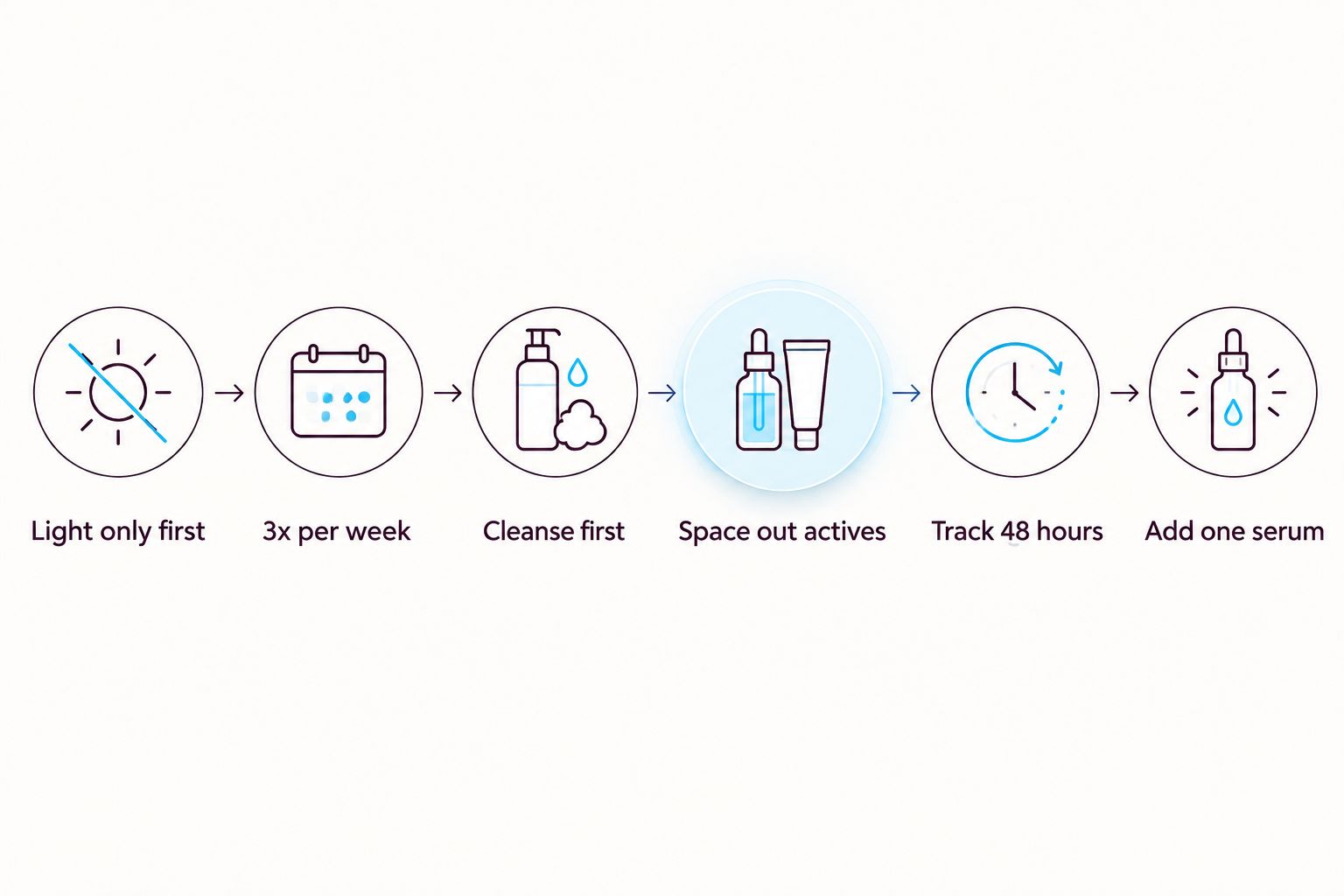
Avoiding common red light therapy mistakes at this stage — overusing the device, skipping cleansing, or stacking too many new products at once — solves most of what gets blamed on "purging" in the first month.
Not everyone reacts the same way when they start, and the variation usually comes down to a handful of factors:
Redness right after a session is normal and typically fades within 30 to 60 minutes as blood flow to the treated area returns to baseline. It's a sign of the light stimulating circulation, not a sign of irritation or purging, and it shouldn't still be visible the next morning.
Skin purging from actives like retinoids typically lasts four to six weeks, matching one full skin cell turnover cycle. Since red light therapy doesn't accelerate that turnover, it doesn't produce this same multi-week pattern — anything lasting that long points to another product in the routine.
Red light therapy on its own does not make acne worse, since it doesn't increase oil production or clog pores. Acne that seems to worsen after starting a device is more often tied to a dirty device head, a newly added active ingredient, or existing hormonal or cystic breakouts running their own course.
Once the introduction period is behind you, pairing the device with a formula built for it — rather than whatever serum happens to be in your routine that week — reduces guesswork. The Light Therapy Boosting Wand Activating Serum is formulated specifically to work with the wand rather than compete with it, and cleaning the device head regularly with dedicated wipes removes a common, overlooked cause of breakouts that have nothing to do with the light.
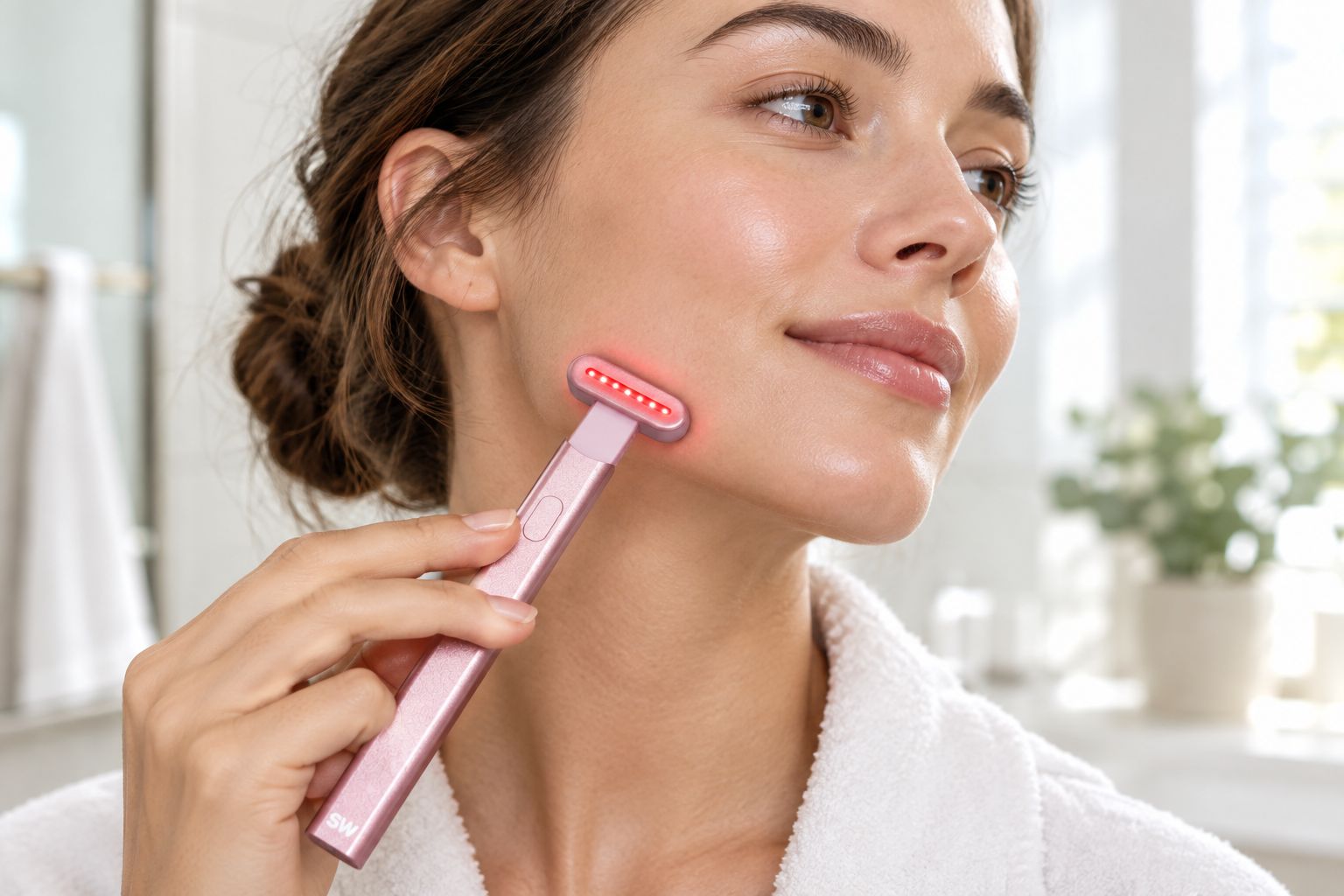
Best for a first-time routine: a single device, one paired serum, and a cleaning routine — not a five-product stack introduced all at once.


Does red light therapy cause purging?
No, red light therapy does not cause true purging because it doesn't speed up cell turnover the way retinoids and acids do. Any breakouts after starting a device usually trace back to another new product or a dirty device head.
Is it normal to break out after starting red light therapy?
A single isolated pimple in the first week can happen, but a spreading pattern of new breakouts is not typical of red light therapy on its own. Check what else changed in the routine that same week before blaming the device.
How soon should I see results from red light therapy?
Most people notice changes in skin tone and texture over several weeks of consistent use in 2026, since the light works by stimulating mitochondrial activity gradually rather than producing an overnight effect.
Can I use red light therapy every day?
Yes, once your skin has adjusted over the first two to three weeks, daily sessions are generally fine. Start at three to four times a week and build up rather than starting with daily use.
Does red light therapy purge blackheads?
No, red light therapy doesn't purge blackheads because it doesn't exfoliate or accelerate turnover the way salicylic acid or retinoids do. Blackhead clearing comes from separate exfoliating treatments, not from light exposure.
Why is my skin red after a red light session?
Redness after a session comes from increased blood flow to the treated area and typically fades within 30 to 60 minutes. It is not the same as irritation or purging and shouldn't persist into the next day.
Should I stop red light therapy if I break out?
Track the breakout for 48 hours before stopping, since most red-light-related reactions resolve in that window. If new spots keep appearing past two days, look at other products introduced the same week rather than the device.
Can red light therapy and retinol be used together?
Yes, but introduce them separately rather than starting both the same week, since retinol causes its own purging period that's easy to confuse with a device reaction. Space applications by at least 10 minutes once both are established in your routine.
Skin cell turnover slows with age — commonly cited around 28 days in younger skin and stretching toward 45 to 60 days in older skin — which means congestion that's already under the surface can take longer to clear regardless of what device gets introduced. If you started a red light mask in your 40s or 50s and see slow-resolving bumps, that's more likely pre-existing congestion clearing on its own timeline than anything the light triggered. Patch-test any new device along the jawline for three days before running full-face sessions in 2026, and you'll know within 72 hours whether the light is the variable worth watching.
 Acne
Acne


