

Rated 4.7 out of 5 stars
4.7 / 5


726,000+ customers
Free 60-Day Returns
1-Year Warranty
726,000+ customers
Free 60-Day Returns
1-Year Warranty
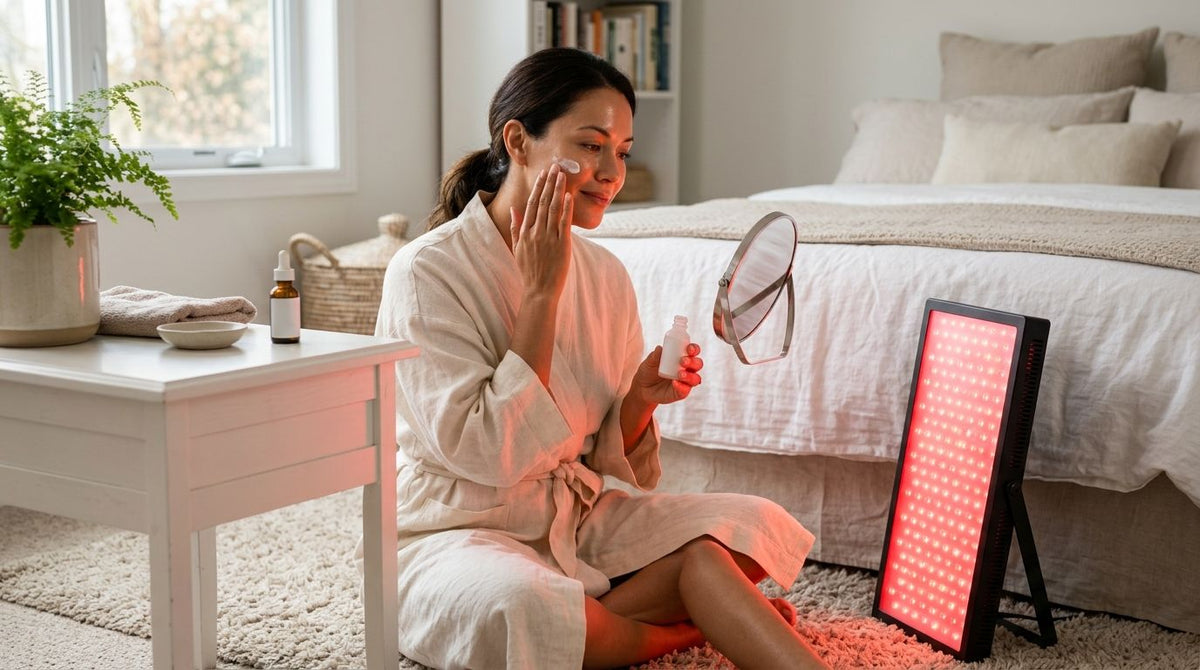
Red light therapy and azelaic acid don't cancel each other out — the two work on different layers of the same problem, and the routine question is really about sequencing, not compatibility. Apply azelaic acid first on clean skin and let it absorb for a few minutes, then run your red light therapy session over it, or flip the order and treat bare skin with light first before layering azelaic acid on top. The caveat most routines skip: azelaic acid causes mild flaking or tingling for the first two to three weeks on new users, and running a warm LED device over freshly applied acid during that window can intensify the sting, so keep the two a few hours apart until your skin has adjusted.
Azelaic acid is one of the most recommended actives for rosacea, post-inflammatory marks, and mild acne because it's anti-inflammatory and doesn't carry the sun-sensitivity baggage of retinoids. Red light therapy has become the at-home add-on people reach for alongside it in 2026, mostly because it targets redness and tone from a different angle without an active ingredient at all.
The question isn't whether they conflict — it's whether stacking them on the same face at the same time causes more irritation than benefit. For most skin, it doesn't, as long as you respect the order and the adjustment period azelaic acid needs on its own first.
There's no single correct order — guidance on layering actives with light-based devices comes down to what's already on your skin and how sensitized it is. Here's the sequence that works for most people once azelaic acid is already tolerated:
For an evening routine, some people prefer azelaic acid first, then light therapy after it's absorbed. Either order works; the mistake is applying both at the exact same moment and rubbing them together on the skin.
| Order | Best for | How it works |
|---|---|---|
| Light therapy first, azelaic acid after | Sensitive or reactive skin | Light on bare skin avoids trapping product under device heat; acid goes on cooled, absorbing skin |
| Azelaic acid first, light therapy after | Established azelaic acid users, dry skin | Full absorption window before the session; nothing gets rubbed around mid-treatment |
Both rows assume azelaic acid is already a settled part of your routine — not week one out of the tube.
A device like the Radiant Renewal Skincare Wand fits into either sequence as the light-therapy step of the stack. It's not a substitute for the acid, and it doesn't change how azelaic acid works on the skin.
No two skincare stacks behave identically, and a handful of factors decide whether same-day combining feels fine or feels like overkill:
If more than two of these point toward "more sensitive," space azelaic acid and red light therapy hours apart instead of stacking them in one sitting.
“If your skin is still peeling from azelaic acid, you're not ready to stack light therapy on top of it — fix one variable at a time.”
Yes, most people can use azelaic acid and red light therapy on the same day once azelaic acid is already tolerated on its own. Space them by a few minutes to a few hours rather than applying both at the exact same time, and drop to alternating days if you notice extra dryness or stinging in 2026's drier months.
No, red light therapy does not cancel out azelaic acid — the two act through different mechanisms, with azelaic acid working as a topical anti-inflammatory and red light therapy working through light exposure at the skin's surface. Nothing about running a light session removes or breaks down azelaic acid already applied.
A few minutes is enough once azelaic acid is fully absorbed and skin isn't tacky to the touch. If you're brand new to azelaic acid, stretch that gap to a few hours, or keep the acid to evenings and light therapy to mornings until the first 2-3 weeks pass.


Solawave makes FDA-cleared red light therapy devices — LED masks, handheld wands, and topicals — so the light-therapy half of this pairing is the part solawave.sbsvers. The azelaic acid stays whatever you already use.
Honest read on the pairing: the upside is that you're addressing redness and tone from two directions without stacking two acids. The downside is more steps, more time, and one more thing to blame when your skin acts up in week two of 2026's routine change. If you'd rather keep it simple, alternate nights.
For larger areas where post-inflammatory marks sit — chest and neck especially — the Neck & Chest Pro light therapy mask covers ground a handheld wand takes several minutes to work across. Same sequencing rules apply there as on the face.
Best for: anyone already using azelaic acid who wants a device step that doesn't add another active ingredient to the routine.
Can I use azelaic acid and red light therapy together in 2026?
Yes, azelaic acid and red light therapy can be used together once azelaic acid is already tolerated on its own. Separate application by a few minutes rather than layering both at once.
Should azelaic acid go on before or after red light therapy?
Either order works, but a light session on bare, clean skin followed by azelaic acid tends to cause less irritation for sensitive skin. Azelaic acid first works fine once your skin is used to it.
Is azelaic acid safe to use with an LED face mask?
Azelaic acid is generally safe alongside LED face masks since it isn't photosensitizing the way retinoids are. Apply it before or after the mask session rather than during it.
Does azelaic acid make skin more sensitive to red light?
No, azelaic acid doesn't increase sensitivity to red light specifically. Standard irritation from a new azelaic acid product is separate from the light session itself.
Can red light therapy make azelaic acid work faster?
There is no established evidence that red light therapy speeds up azelaic acid results. The two are complementary steps in a routine, not accelerators of one another.
How often should you combine azelaic acid with red light therapy?
Daily combination is fine for skin that already tolerates azelaic acid well. New users should run one or the other alone for the first 2-3 weeks before combining daily.
Can you use azelaic acid with a red light therapy wand on the neck?
Yes, the same sequencing applies to the neck as the face: clean skin, light session, then azelaic acid, or the reverse once tolerated.
What should I do if azelaic acid stings after a red light session?
Stop combining them the same day and split the two into different times of day instead. Stinging usually settles within the first 2-3 weeks of azelaic acid use regardless of light therapy.
The most overlooked detail in this pairing isn't the order — it's the strength of the acid. A 10% OTC azelaic acid serum slots into a red light therapy routine with far less friction than a 15-20% prescription formula, which is the version most likely to cause the flaking that makes a session uncomfortable. If you're on the prescription strength, treat the first month as azelaic-acid-only and add light therapy back once the peeling stops.
 Acne
Acne

